I'm learning German - I don't think I said. It's quite fun, although you never learn much at an evening class because there are lots of people of mixed ability and you can't ask the teacher important linguistic questions because it's not fair to expect non-linguists to know the answer to such things.
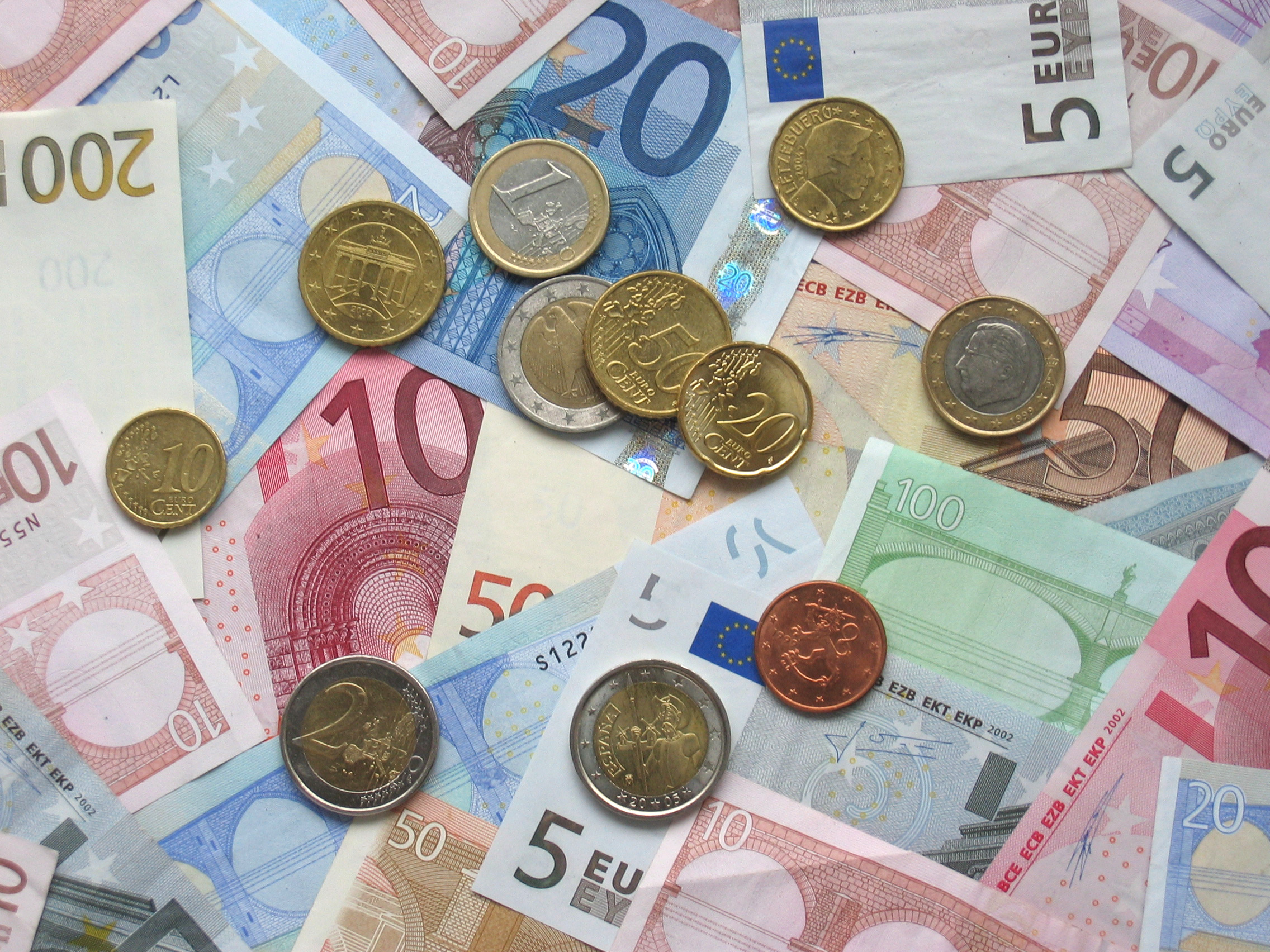
Anyway today, we learnt about currencies and big numbers, among other things. Germany obviously uses the euro as its currency, which is Euro in German. I checked, and it's not pluralised. Languages vary on what they do with the plural, so in Spanish you have 1 euro and 10 euros, but in Italian you have 1 euro and 10 euro, not 10 euri (which just looks weird). I think the most interesting thing about this is the difference between British English, which is spoken in a country where the euro isn't used and pluralises it (10 euros), and Irish English, which is spoken in a country where it is used (so it's a much more frequent word) and doesn't pluralise it (10 euro). I don't know what Northern Ireland does - I'm sure someone will tell me. I remember noticing it when an Irish friend-of-a-friend and thinking it was funny to hear an English speaker do what I'm used to hearing in other languages.
German doesn't pluralise it, as I say. Nevertheless, my teacher today definitely said '10 euros' at one point. A slip of the tongue, no doubt, or perhaps it is pluralised in some non-standard variety that she is not teaching us. But either way, it's interesting for a morphology reason. Steven Pinker published a book in 1999, too early to mention the pluralisation of euro because it had only just been introduced. But he did talk about German plural suffixes. -s is 'by far the least common' of the several possibilities (-e, -er, -en, -s, or nothing), but it is the Notpluralendung, or 'emergency plural' (p.222). It's the one you pick if the word is new, or doesn't normally pluralise. That's why it turns up on foreign words or names, and, in this case, on Euro.
