Showing posts with label Sapir-Whorf. Show all posts

Saturday, 18 August 2018

The Conversation: 'untranslatable' words tell us more about English speakers than other cultures

I wrote a piece for The Conversation recently, which I'm reposting here just in case you haven't seen it yet.

Language: 'untranslatable' words tell us more about English speakers than other cultures
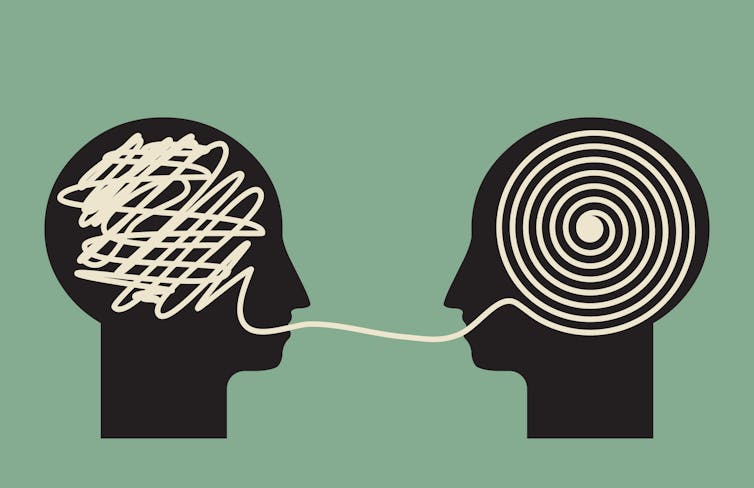


File 20180806 191038 ewcqb9.jpg?ixlib=rb 1.1
Say what? Shutterstock
Laura Bailey, University of Kent
When the word “hygge” became popular outside Denmark a few years ago, it seemed the perfect way to express the feeling of wrapping yourself up in a crocheted blanket with a cosy jumper, a cup of tea and back-to-back episodes of The Bridge. But is it really only the Danes, with their cold Scandinavian evenings, who could have come up with a word for such a specific concept? And is it only the Swedes who could have needed the verb “fika” to describe chatting over a coffee?
The internet abounds with words that lack a single-word English equivalent. In order to be really lacking an English equivalent, it must be a single, indivisible unit of meaning, as phrases are infinitely productive and can be created on demand by combining different words. Take, for example, the claim by Adam Jacot de Boinod in I Never Knew There Was A Word For It, that Malay has a word for the gap between the teeth that English lacks: “gigi rongak”. Well, this appears to be a phrase, and it translates literally as the perfectly cromulent English phrase “tooth gap”.
In fact, English even has a single-word technical term for a gap between the teeth: “diastema”. Okay, that’s actually a Greek word, but it’s in use in English, so it’s also an English word. Does that matter?
Where we get our words from tells us something about our history. Take, for instance, Quechua – the language spoken by people indigenous to the Andes and the South American highlands. The Quechuan word for “book” is “liwru”, which comes from the Spanish word “libro”, because Spanish colonisers introduced written forms of language to the people they conquered. In fact, English does now have a word for “hygge” – it’s “hygge”.

Cultures in language

It is often said that Eskimos have 50 words for snow, but it’s a myth that has been comprehensively dismantled, probably first of all by Laura Martin in 1986. “Eskimo” is a somewhat meaningless term anyway, but the structure of the languages spoken by peoples such as the Inuit or Aleut in the Arctic Circle are very synthetic, meaning that each “word” may comprise many parts or “morphemes”.
Entire phrases can be contained within words in these languages – a single “word” may literally mean “fallen snow”. For that reason, “having 50 words for snow” in these languages is about as remarkable as having 50 sentences to talk about snow in English.


The ‘50 words for snow’ fallacy is a perfect example of misreading a culture. Shutterstock

And yet the myth and others like it snowball, because we are fascinated by the idea that language reveals something about our psyche – or perhaps even determines it. The economist Keith Chen has devoted some considerable effort to demonstrating that speakers of languages that grammatically encode the future and the present separately behave more recklessly with respect to their health and money. He argues that it shows that overt future tense marking makes a speaker more aware of the future as a separate time from the present and thus more distant, which has a corresponding effect on behaviour.
Many linguists have some reservations about his conclusions, but the main claim hit the news and people were intrigued by the idea.

False cultural judgements

While careful experimentation has shown that having words for concepts makes them easier or faster to name, it is not true that lacking a concept means you cannot conceive of it, and vice versa. For instance, many languages have gender-neutral pronouns (the same word is used for he and she) but are spoken in cultures with very poor levels of gender equality.
This might seem obvious – it’s Orwell’s Newspeak (from 1984) in action. In Orwell’s dystopia, the word “free” was stripped of all meaning of individual freedoms and could be used only in the sense of a dog being free from lice, which in turn was supposed to remove the ability of the citizens of Oceania to conceive of such freedom. But it is not just science fiction. There is an important note of caution that linguists are always aware of: making claims about other cultures risks “exoticising” them.


A mural depicting indigenous people in Arizona. Shutterstock

At worst, this results in racism. The Hopi people of Arizona, who are sometimes claimed to have no way to express time based on a misunderstanding of Benjamin Lee Whorf’s work on their language, were assumed by some to be incapable of following bus timetables or arriving at work on schedule, a mistaken belief that led to obvious problems.
But even an apparently benign conclusion about how some Australian languages encode space with compass directions (“north”) rather than ego-relative position (“my left-hand side”) suggests English speakers often miss out on knowledge about language and cognition because they are busy measuring things against an arbitrary English-centric benchmark. Different language conventions are usually not exotic or unusual; it’s just that English speakers come from a position of very great privilege because their language is the default. People who speak other languages are seen as different, as outsiders.
The Conversation
I’m not a total killjoy. I still delight in “untranslatable” words. It’s something special to learn a word and along with it make concrete a nebulous but recognisable concept like hygge, or indeed its wonderfully chilling opposite, uhygge. I just suggest a position of healthy scepticism when you meet claims that a language has “no word for X” or “50 words for Y”, or, as the internet recently got excited about, that “tag” stands for “touch and go” (sorry folks, it doesn’t).
Laura Bailey, Lecturer in English Language and Linguistics, University of Kent
This article was originally published on The Conversation. Read the original article.

Thursday, 29 September 2016

Linguistics of 'Arrival'

In this post I slightly spoil some of the funny bits and a lot of the linguistics in the film, though probably not the crucial bits, I don't think. Stop reading now if you want to play it safe.

Excitingly, I managed to get invited to a screening of Arrival last week, a good six weeks before it's due out on general release. I went with a handful of other linguists, so we enjoyed the complimentary booze with a bunch of (we assume) critics and then settled down to watch a film that we were somewhat trepidatious about. The main character in this film is a linguist, and this doesn't always give a terribly accurate impression of our business. However, some of my companions had read the short story it's based on, The story of your life by Ted Chiang, and were hopeful that the film would do this story justice.

It did, as it happens, and I'd recommend it if you like thoughtful scifi with aliens, stern US military types and a romantic side-plot. Personally I'm not a huge fan of all these things; the romantic side-plots can do one as far as I'm concerned, but in this film it worked well and contributed to a really clever twist to the story.

Right. David Adger has written a nice post about the language of the aliens and how 'alien' it really is. I'm going to focus on a few points where linguistics was a focus of the film and how it was treated.

The language in the film, Heptapod (the aliens have seven tentacle-feet things), is a visual language. There is a spoken language as well, but the linguist protagonist, Dr Louise Banks, decides that the visual language is the one she can work with to communicate with them. I can't remember why she thinks that, now, but it probably would have been harder to synthesise the spoken language to communicate with them (and she certainly couldn't produce it herself). (Note to self: don't try and write film reviews after having seen them and then drunk lots of wine a week previously.)

This language is formed by the heptapods squirting a sort of squid-ink-type substance in circular shapes with irregular edges, like coffee cup rings. These irregular bits are not actually irregular, of course, as they are what conveys the meaning. Each ring is a sentence (I don't know if we found out if they have complex sentences, with more than one clause). These symbols (the Independent calls them a 'complex form of hieroglyphs', though I'm not sure why) are holistic: they're produced as a whole, not made up of obvious parts. This is important to the story, as it is representative (in fact the cause) of the way the heptapods see the world: time is non-linear to them. However, they're not inseparable. In translating the language, with a good deal of computer analysis, the scientists identify tons of nodes in the rings that map onto meaning. When Louise talks to the heptapods, she creates rings from four or five segments. Clearly, there is combinatorial stuff going on here. I think the story talks more about how it works, so I'll know more about that once I've read it.

I liked the way Louise and her job are portrayed, for the most part. She is called a 'linguist', not any other job title, and she really is one. Near the start of the film, we see her giving a lecture on comparative romance linguistics. She employs what are, as far as I'm aware, linguistic fieldwork methods in her efforts to understand the heptapod language (she proceeds very quickly, but maybe that's because she has the US military and its computers behind her). Linguistics is referred to as a science and compared favourably to maths at one point by the theoretical physicists (not sure what he was there for).

***slight spoilers***
At one point, she told the kangaroo story, which Wikipedia relates like this:
Cook and Banks were exploring the area when they happened upon the animal. They asked a nearby local what the creatures were called. The local responded "Kangaroo", meaning "I don't understand you", which Cook took to be the name of the creature.
The row of linguists sat in stony silence at the punchline. However, when she reveals it not to be a true story a moment later, we had the last laugh.
***spoiler over***

Some things were a little bit less accurate. For one thing, her house was amazing. What mid-career female linguist is paid that much money? Perhaps she was well-paid for the work she'd done when seconded to the army previously.

She also speaks all the languages. I mentioned at the start that she was lecturing in comparative romance linguistics. Perhaps this isn't her specialism; heaven knows I lecture in all kinds of things that I don't know an awful lot about. But we do know that she was able to help the military with some Farsi interpreting. When the Colonel turns up on her doorstep and asks 'Do you speak Mandarin?', the answer is apparently 'yes'. There's possibly an explanation of this later in the film, but at that point it feels like a very lucky coincidence and playing into the stereotype of what linguists do (i.e. speak all the languages).

At one point, it seems that she is going to be unsuitable for the work they want her to do. She asks them if they're going to see some other guy next (let's call him Linguist B as I didn't make notes) and says, 'Ask him the Sanskrit word for war and its translation' (which as my colleague noted doesn't make much sense, but I guess I know what they meant). He comes back and says that Linguist B said it means something violent, and what does she say it means? She says 'a desire for more cows'. A quick internet search shows that this is generally known, although I'm afraid I lack the desire to fact-check it. This plays into the Sapir-Whorfianism that runs throughout the film, whereby language shapes the way you think. It doesn't actually make much sense to say the Sanskrit word for 'war' means 'a desire for more cows'. Either it literally means that but is used to mean 'war', in which case it means 'war', or else it isn't the word for 'war'. Sanskrit speakers definitely have the ability to wage war, so it's not that they don't have a concept of it due to the lack of a word for it.

But still. At one point she is explaining why she needs to go through a ton of basic stuff like pronouns when all they want to know is 'What is your purpose on earth' and we get a great linguistic explanation of everything that's involved in understanding and therefore answering that question. We also get a nice 'problem of translation' point when it hinges on whether a certain word means 'weapon' or 'tool' (and the answer to which it is is pretty cool by the way).

I'm happy with it, as a linguist and as a scifi fan. Go and see it. It's good.

Aside: Reviews are less linguistically well-informed. Apart from the aforementioned use of 'hieroglyphs' in the Independent, the Guardian says this:
Why, you ask, did they not approach Noam Chomsky, with his understanding of “deep structure” in language? Perhaps Prof Chomsky did not care to help America’s military-intelligence complex.
I assume they've said this just to make a sort of political joke, but this is such a stupid question it should never have been asked. I also have an understanding of 'deep structure' in language, having studied it for 12 years or so now, and I can assure you it doesn't give you a magical ability to understand unfamiliar languages. If anything, it might make him less able to work with a language that may not conform to this deep structure (see David's post linked earlier). Linguistic fieldwork is a fiendishly difficult task that takes years of training and practice to do well, and it's something that Chomsky has not specialised in. In fact, he's often criticised for doing precisely the opposite.

Thursday, 9 January 2014

Passive voice

Yeah, I'm going there.

UPDATE: As I was writing this post, Geoff Pullum blogged on Language Log, noting that he has completed a paper describing his excellent position on the matter of passives, and you can read his forthcoming paper there.

So anyway, what I was going to talk about was just a couple of interesting times I've noticed it.

First: someone tweeted Alexander Armstrong to say that he wished he would 'stop being referred to as Zander':

As well as being a bizarre thing to say, this is a bizarre syntactic construction. I guess he has phrased it this way to avoid using a vague subject like 'people' or 'contestants and Richard Osman'. After all, one of the main reasons for using the passive is when you don't know or don't want to make a big thing about the subject. Unfortunately, using stop often implies some sense of agency, when it's predicated of a person. Not always: He's stopped burning would not be any more agentive than the fire's stopped burning, of course. I think it must be because stop occurs with another verb in the present participle form, and when that verb is agentive the whole construction is agentive. And refer is agentive. This gives the weird idea that Xander has to somehow stop a process from happening to him that's entirely beyond his control.

Second: passives betraying speaker attitudes. I was listening to the radio and someone told a very funny story about Stevie Wonder, in which he apparently used to freak out his house guests by picking them up at the gate and driving them half a mile or so up the drive to his house (this being terrifying on account of his being blind). The way the person phrased it (sorry I can't give more info or be specific - I had the details but they were lost in a technical snafu) was this:
Stevie Wonder was taught to drive from his gate to his house.
Was taught is passive, indicating that someone is doing something to Stevie Wonder. Passive reverses the roles in the sentence, so giving it in the active would mean the opposite: Stevie Wonder taught someone to drive. However, we have a nifty little thing whereby we have an active verb that means more or less the same as the passive form of teach: learn. (It doesn't mean exactly the same, but in some contexts, including this one, it's near as dammit.) So we now have a choice with no meaning difference, between these two sentences:
Stevie Wonder was taught to drive.
Stevie Wonder learnt to drive.
If there is no meaning difference, we make the choice on (among other things) stylistic grounds. Some would say don't use the passive - I'm not one of those people. Go ahead and use it if you like. But in this case, I think there is another reason not to use it, and that's again related to agency, although this time not just on grammatical grounds.

If you compare the two, with learnt, it was Stevie Wonder's volition to drive. With was taught, agency is given to some other, unnamed person. While I'm quite sure it was still Stevie Wonder's decision to do so, the sentence may be interpreted as reflecting a subconscious belief that people with disabilities can't or don't play jokes, make decisions or control their own lives to the extent that non-disabled people do.

Language doesn't influence thought (oversimplification - sorry), but it can reflect beliefs and reinforce attitudes.

Saturday, 27 April 2013

Explore: Words around the world

You may remember that I did a talk for the Centre for Lifelong Learning's Explore programme last year, as part of a training exercise in presenting research to a public audience. I found it a very enjoyable challenge to present my PhD work to people who had no specialist knowledge of linguistics. 

Happily, they invited me back to do a session on the themed season 'The Word'. Well, seeing as words are a large chunk of what linguists study, that sounded like good fun. I've been teaching morphology all term, and so I thought I'd do a bit of a romp through some fun morphological stuff. 

The nice thing about doing a one-off session for fun is that you don't have to make sure they grasp all the fine points of the technical terminology, so you can essentially leave out the boring bits and just do the fun bits. I thought that for this session, I'd get them to think about what words are, so first of all we built words out of morphemes (parts of words) written on cards, and I introduced them to the concept of building words from smaller parts and how this works in different languages. We also covered a few 'language myths' (Eskimo words for snow, no word for X, Sapir-Whorf and colour terms, etc.) and finished by thinking about how to define 'word'. 

The venue was St Nicholas' cathedral in the centre of Newcastle, and rather than in one of the function rooms, I actually spoke in the south transept: 


This was a lovely venue for a talk, and made a nice change from seminar rooms. 

The audience was the best I could have wished for, interacting with me right from the start and asking intelligent questions that showed they were really interested in the topic. They contributed some interesting facts and examples of their own, and overall made it a truly fun afternoon. 

Saturday, 3 September 2011

Linguistic sci-fi, part one

We were having a conversation about linguistic sci-fi the other night in the pub (best place for it, I find). I love sci-fi, and I love linguistics, and I once read a list by Geoff Pullum (in the collection of his columns, 'The great Eskimo vocabulary hoax') of books that combine the two.

To count as linguistic sci-fi, language/linguistics has to be relevant to the story, in my opinion. It's not enough that they just speak a different language, like Klingon in Star Trek. Although there is some linguistic aspect, as Klingon is obviously supposed to sound aggressive, you couldn't say that Star Trek is linguistic sci-fi just because of that. To count, the language has to be central or at least important to the plot.

The books on Pullum's list turned out to be surprisingly hard to get, but this is one I did find on Amazon:

It wasn't that great, to be honest. The basic idea is that someone wants to control the people of Pao, who are docile and peaceful (well, not warlike anyway). To control them and make them a bit more fighty, the scientists at another planet, Breakness, have devised a new language which will allow them (force them?) to be less placid. It's obviously all very Sapir-Whorfian, and an interesting idea. It's unfortunately not really my kind of book, being the kind where the characters must flee things and avenge people and wear big weapons and so on.