Showing posts with label cognition. Show all posts

Saturday, 18 August 2018

The Conversation: 'untranslatable' words tell us more about English speakers than other cultures

I wrote a piece for The Conversation recently, which I'm reposting here just in case you haven't seen it yet.

Language: 'untranslatable' words tell us more about English speakers than other cultures
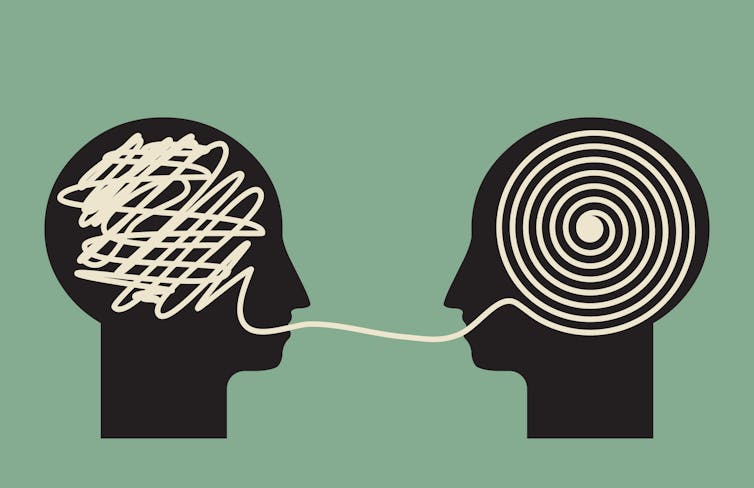


File 20180806 191038 ewcqb9.jpg?ixlib=rb 1.1
Say what? Shutterstock
Laura Bailey, University of Kent
When the word “hygge” became popular outside Denmark a few years ago, it seemed the perfect way to express the feeling of wrapping yourself up in a crocheted blanket with a cosy jumper, a cup of tea and back-to-back episodes of The Bridge. But is it really only the Danes, with their cold Scandinavian evenings, who could have come up with a word for such a specific concept? And is it only the Swedes who could have needed the verb “fika” to describe chatting over a coffee?
The internet abounds with words that lack a single-word English equivalent. In order to be really lacking an English equivalent, it must be a single, indivisible unit of meaning, as phrases are infinitely productive and can be created on demand by combining different words. Take, for example, the claim by Adam Jacot de Boinod in I Never Knew There Was A Word For It, that Malay has a word for the gap between the teeth that English lacks: “gigi rongak”. Well, this appears to be a phrase, and it translates literally as the perfectly cromulent English phrase “tooth gap”.
In fact, English even has a single-word technical term for a gap between the teeth: “diastema”. Okay, that’s actually a Greek word, but it’s in use in English, so it’s also an English word. Does that matter?
Where we get our words from tells us something about our history. Take, for instance, Quechua – the language spoken by people indigenous to the Andes and the South American highlands. The Quechuan word for “book” is “liwru”, which comes from the Spanish word “libro”, because Spanish colonisers introduced written forms of language to the people they conquered. In fact, English does now have a word for “hygge” – it’s “hygge”.

Cultures in language

It is often said that Eskimos have 50 words for snow, but it’s a myth that has been comprehensively dismantled, probably first of all by Laura Martin in 1986. “Eskimo” is a somewhat meaningless term anyway, but the structure of the languages spoken by peoples such as the Inuit or Aleut in the Arctic Circle are very synthetic, meaning that each “word” may comprise many parts or “morphemes”.
Entire phrases can be contained within words in these languages – a single “word” may literally mean “fallen snow”. For that reason, “having 50 words for snow” in these languages is about as remarkable as having 50 sentences to talk about snow in English.


The ‘50 words for snow’ fallacy is a perfect example of misreading a culture. Shutterstock

And yet the myth and others like it snowball, because we are fascinated by the idea that language reveals something about our psyche – or perhaps even determines it. The economist Keith Chen has devoted some considerable effort to demonstrating that speakers of languages that grammatically encode the future and the present separately behave more recklessly with respect to their health and money. He argues that it shows that overt future tense marking makes a speaker more aware of the future as a separate time from the present and thus more distant, which has a corresponding effect on behaviour.
Many linguists have some reservations about his conclusions, but the main claim hit the news and people were intrigued by the idea.

False cultural judgements

While careful experimentation has shown that having words for concepts makes them easier or faster to name, it is not true that lacking a concept means you cannot conceive of it, and vice versa. For instance, many languages have gender-neutral pronouns (the same word is used for he and she) but are spoken in cultures with very poor levels of gender equality.
This might seem obvious – it’s Orwell’s Newspeak (from 1984) in action. In Orwell’s dystopia, the word “free” was stripped of all meaning of individual freedoms and could be used only in the sense of a dog being free from lice, which in turn was supposed to remove the ability of the citizens of Oceania to conceive of such freedom. But it is not just science fiction. There is an important note of caution that linguists are always aware of: making claims about other cultures risks “exoticising” them.


A mural depicting indigenous people in Arizona. Shutterstock

At worst, this results in racism. The Hopi people of Arizona, who are sometimes claimed to have no way to express time based on a misunderstanding of Benjamin Lee Whorf’s work on their language, were assumed by some to be incapable of following bus timetables or arriving at work on schedule, a mistaken belief that led to obvious problems.
But even an apparently benign conclusion about how some Australian languages encode space with compass directions (“north”) rather than ego-relative position (“my left-hand side”) suggests English speakers often miss out on knowledge about language and cognition because they are busy measuring things against an arbitrary English-centric benchmark. Different language conventions are usually not exotic or unusual; it’s just that English speakers come from a position of very great privilege because their language is the default. People who speak other languages are seen as different, as outsiders.
The Conversation
I’m not a total killjoy. I still delight in “untranslatable” words. It’s something special to learn a word and along with it make concrete a nebulous but recognisable concept like hygge, or indeed its wonderfully chilling opposite, uhygge. I just suggest a position of healthy scepticism when you meet claims that a language has “no word for X” or “50 words for Y”, or, as the internet recently got excited about, that “tag” stands for “touch and go” (sorry folks, it doesn’t).
Laura Bailey, Lecturer in English Language and Linguistics, University of Kent
This article was originally published on The Conversation. Read the original article.

Monday, 30 April 2012

Think foreign, think rational

Well this is weird. Apparently, if you think in a foreign language when you're making a decision, you're more likely to make a rational, deliberate choice than to go with your gut instinct.

The premise is that these two contradictory scenarios are both plausible, so which one is right?:
  1. Thinking in another language takes up cognitive power, so there aren't enough little grey cells left for decision-making, and you go with your gut.
  2. Thinking in another language forces you to think quite consciously and deliberately, so you don't have as much freedom to make impulsive choices.
The experiment was based on Daniel Kahneman's famous study of framing: people are presented with a problem which involves them having to make a decision about saving or losing lives. There are two options, one of which means saving 200 out of 600 lives and the other means taking an all-or-nothing chance which will either save everyone or no one. Most people play safe and save 200 people. The framing part is that it's also presented in terms of losing lives, in which case they can either lose 400 out of 600, or take the all-or-nothing chance. Now most people prefer to take the risk. (Well, wouldn't you rather be the person that tried to save all the lives than the person who deliberately killed 400 people? Never mind that the person that chose to save 200 people was doing exactly the same thing.)

This means that people fluctuate wildly depending on how the problem is worded (framed), and allow their emotions to make illogical decisions when faced with a really hard choice. If you could remove that element of 'gut instinct', people would make the same choice each time (whichever choice it was). So if 2 above is right, this fluctuation should disappear or be much reduced. If 1 is right, it should remain.

In this new experiment, the same scenario was presented to groups of people in their first language (English) or their second language (Japanese). Graph a shows the number of people who chose the 'safe' option (chose to save the 200) in English and in Japanese. The black bar is when it's framed as saving lives, the grey when it's framed as losing them. You can see that in Japanese (L2), the number of people choosing that option remained constant, showing that they made more conscious, deliberate choices in their second language. (Graph b shows another similar experiment done on Korean speakers who'd learnt English, giving the same result.)

They even tried it with a small-risk, real-life experiment to see if it was the same, and in the process proved just how stupid people are. They gave students who had L1 English and L2 Spanish $15. For each dollar, the choice was to keep a dollar, in which case they had a dollar, or to gamble it. They might lose it, but if they won, they would get their original dollar back plus $1.50. So there is a very short-term risk, but the risk is low and the payoff worth a gamble, surely. And there's the added fact that if you gamble all your $15, you're pretty much likely to come out a couple of dollars better off. If you win nearly half the time, say 7 times out of 15 bets, you'll lose $8, but you'll win $10.50, leaving you with $17.50. Only 54% of students took the bet when it was presented in English, but when they had to use their second language, 71% of them did.

This shows that students aren't good at maths, and that people are really really scared of risk and will make irrational decisions in order to avoid it. Reduce their irrationality, and you get less risk-averse and more logical students. But then, why would you want that?

Monday, 28 November 2011

Fenton the dog. Or Benton the dog.

A video has gone viral of a dog chasing some deer in Richmond Park in London. It's quite funny, I suppose, though it's odd the things that catch people's attention.


Anyway, everyone thought the dog was called Benton, which is I suppose a reasonable enough name for a dog, to call him after Eriq LaSalle's character in ER. My goldfish is called Steve, named after Miles Davis. But it turns out that the dog is called Fenton, perhaps named after Alvin Stardust.*

That reminded me of the McGurk effect, which is an amazing illusion that illustrates just how bad we are at hearing stuff right when our eyes tell us different. Watch this clip from BBC's Horizon: Is Seeing Believing? (from earlier this year, I think). It illustrates it quite nicely.


Weird, isn't it? Maybe the dog didn't come back when he was called because he heard Benton as well.

*OK, that got a bit surreal there for a moment. So, my goldfish is called Steve. We did have two, called Miles and Davis. Miles went to the big fishbowl in the sky, and we felt we really couldn't be left with a fish called Davis. So we started calling him Steve, as in Steve Davis.

The Alvin Stardust/Fenton thing is an interesting story. The man later known as Alvin Stardust had hits in the 60s as Shane Fenton (and the Fentones). However, that's not his real name either. He was born Bernard Jewry, and was hanging about with a band, Shane Fenton and the Fentones, who were waiting to hear back about a demo tape they'd sent to the BBC. But then the original Shane Fenton (also not his real name) died, aged 17. The band were going to break up until suddenly they got the call from the BBC they'd been waiting for. Fenton's mother asked them to continue, in memory of her son, and Jewry became the new Shane Fenton. Apparently Fenton had chosen the name because it sounded 'American' and therefore (at that time) cool.

Friday, 25 November 2011

Who are 'Asians'?

So, there's this book. (You can't Click to look inside!, that's just part of the image. Go to Amazon if you want to do that.)

I'm not going to review it because I haven't read it (it's only on Kindle and I don't have one, as you know), and it's not fair to review a book based on the publisher's blurb. Let me just say that I'm deeply sceptical about its central claim, which is
that "human cognition is not everywhere the same"-that those brought up in Western and East Asian cultures think differently from one another in scientifically measurable ways. Such a contention pits his work squarely against evolutionary psychology (as articulated by Steven Pinker and others) and cognitive science, which assume all appreciable human characteristics are "hard wired." 
Of course there are cultural differences, and they may well be measurable, but I really don't think that this challenges the idea that all human cognition is basically the same.

[Update: I found this blog post with the text of an article submitted to Cognitive Linguistics. It reanalyses Nisbett's work and reckons it's due to linguistic differences rather than cultural differences, as Chinese people respond differently from Japanese people in tests. For instance, head-directionality, they claim, means that Japanese people mention context first, whereas American people mention salient information first.]

Anyway, like I say, I'm not reviewing it. I'm quibbling about a decision (by the publishers?) to keep the subtitle that was used in the US edition. It's this:
How Asians and Westerners think differently... and why.
I'm reasonably comfortable with the use of catch-all expressions for broad ethnic groupings; sometimes it's necessary. So 'Westerners', for me, means North Americans and West/Central Europeans, and probably also Eastern Europeans as well nowadays. As far as I can tell from the blurb, that's pretty much what the author intends:
those brought up in Northern European and Anglo-Saxon-descended cultures
But 'Asian', to me and to most UK English speakers, means people who look a bit like this:

That's Nihal, a well-known DJ on BBC stations Radio 1 and Asian Network. This differs quite a lot from what most US speakers mean by 'Asian':

Presumably the publisher knows about this difference. And presumably they didn't put the subtitle on the front cover for this reason. And throughout the blurb, it refers to 'East Asians', which is presumably a concession to this difference in the meaning of the word. But still, it makes me think the whole book is equally as careless (I'm sure it's not) and puts me right off reading it.

(Actually, we really could do with a better term than 'East Asian'. 'Oriental' doesn't seem to cut it these days, even though it just means 'eastern'. I'm fresh out of ideas though.)